Geography and distribution
The silver birch is native to many parts of Europe, including the UK, and to North Asia.
Description
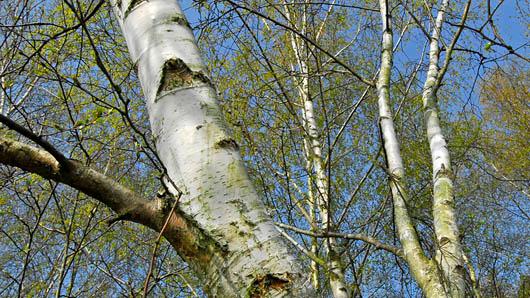
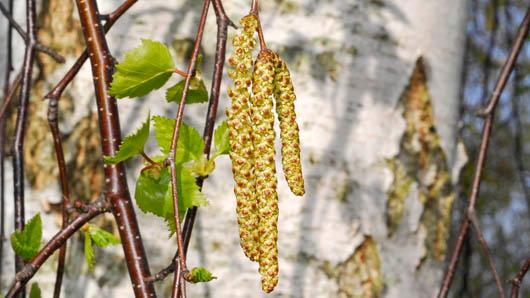
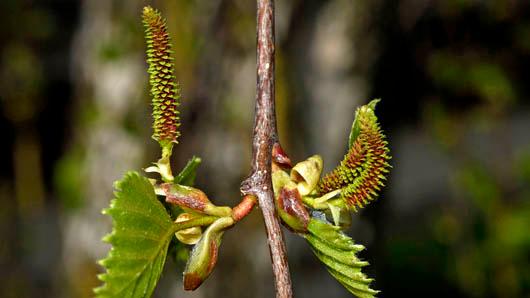
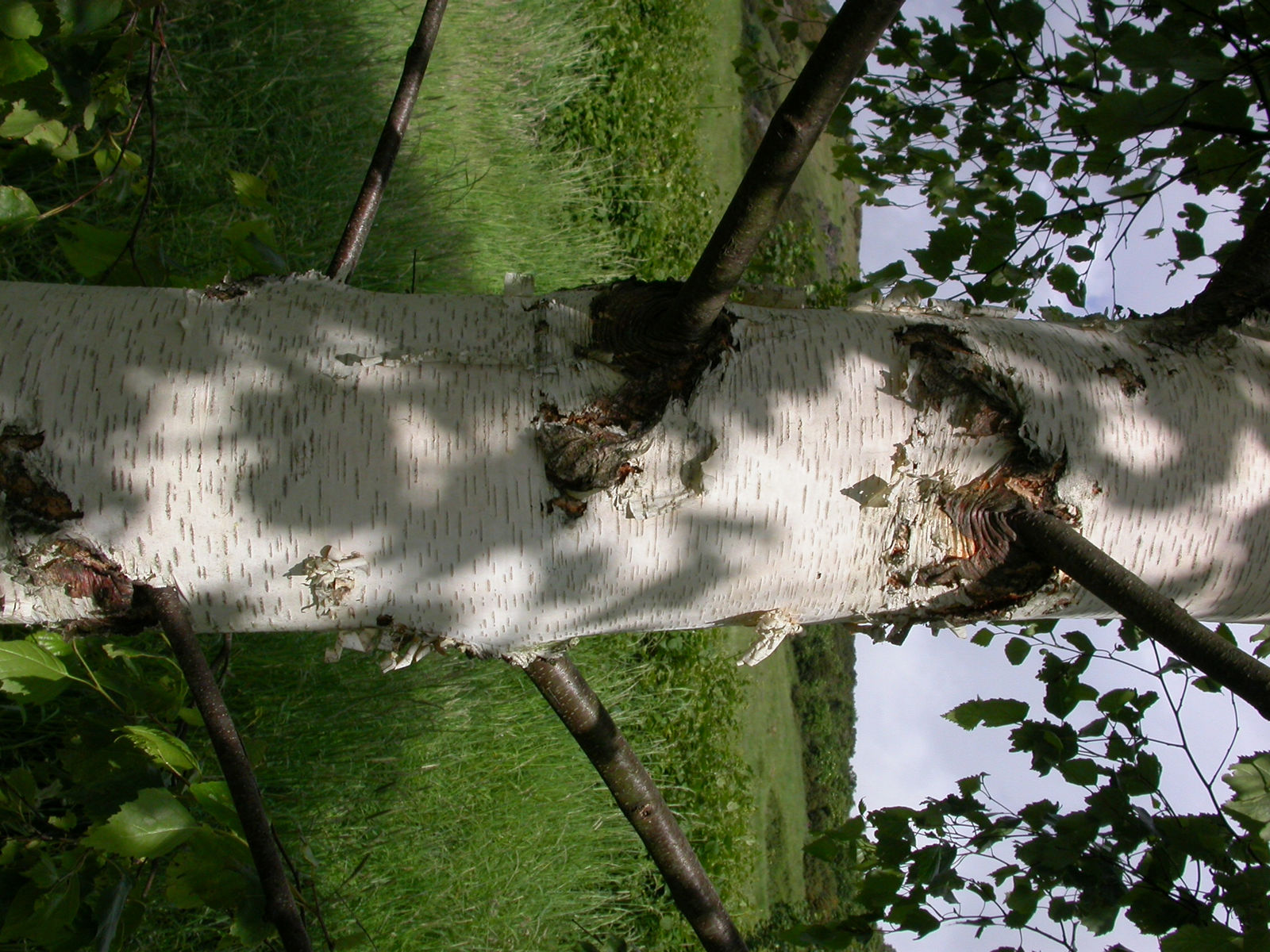
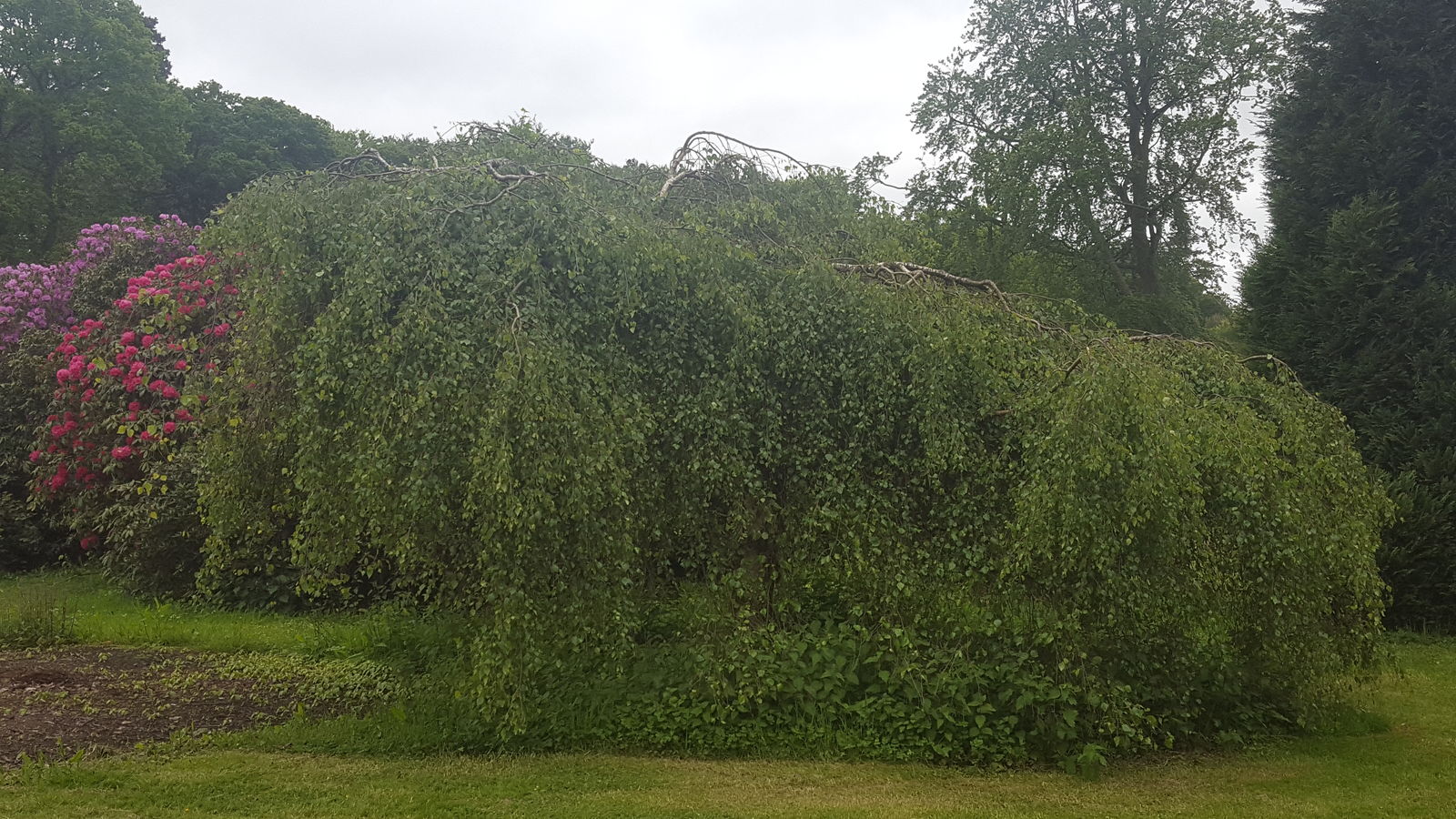
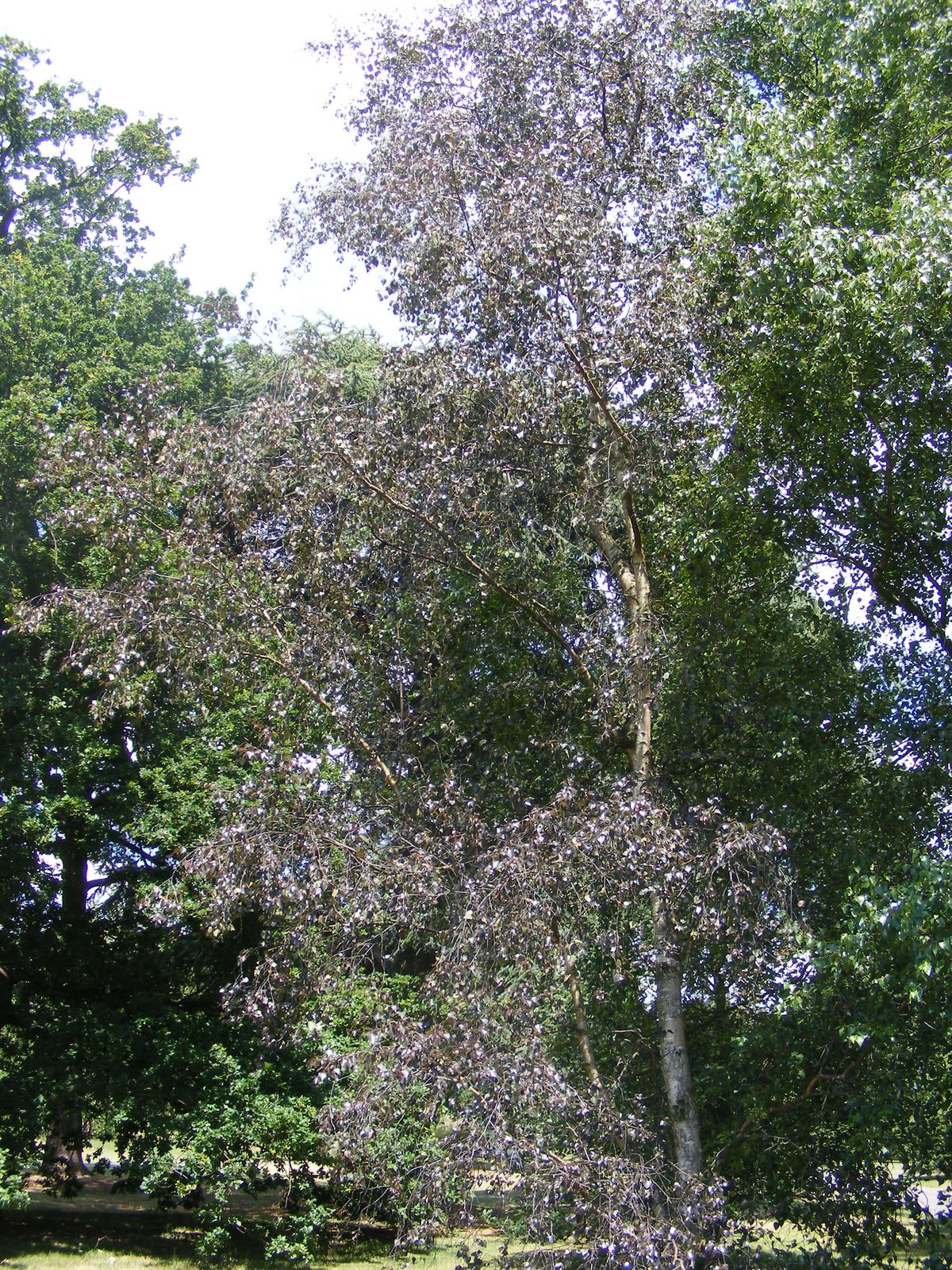
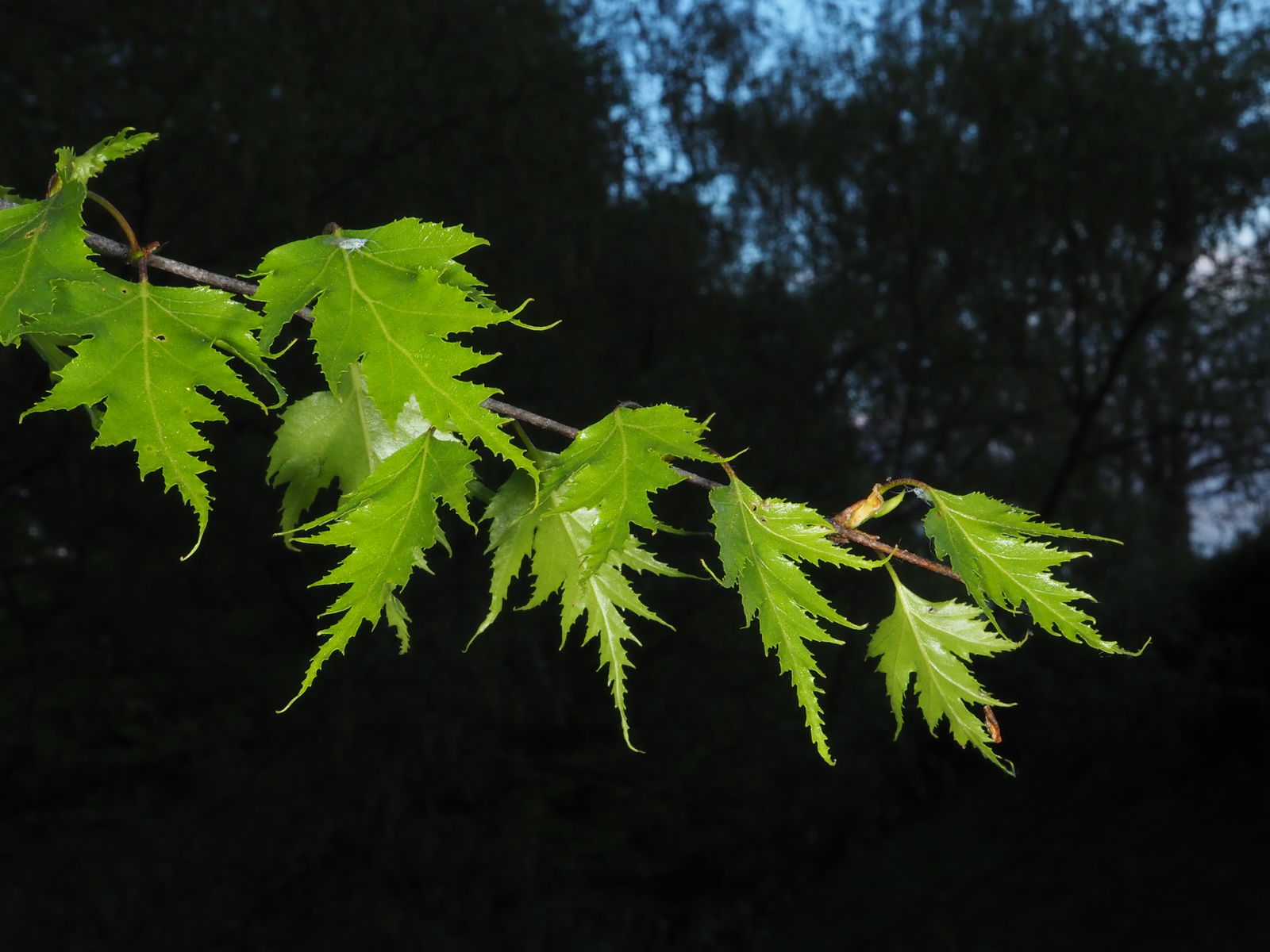
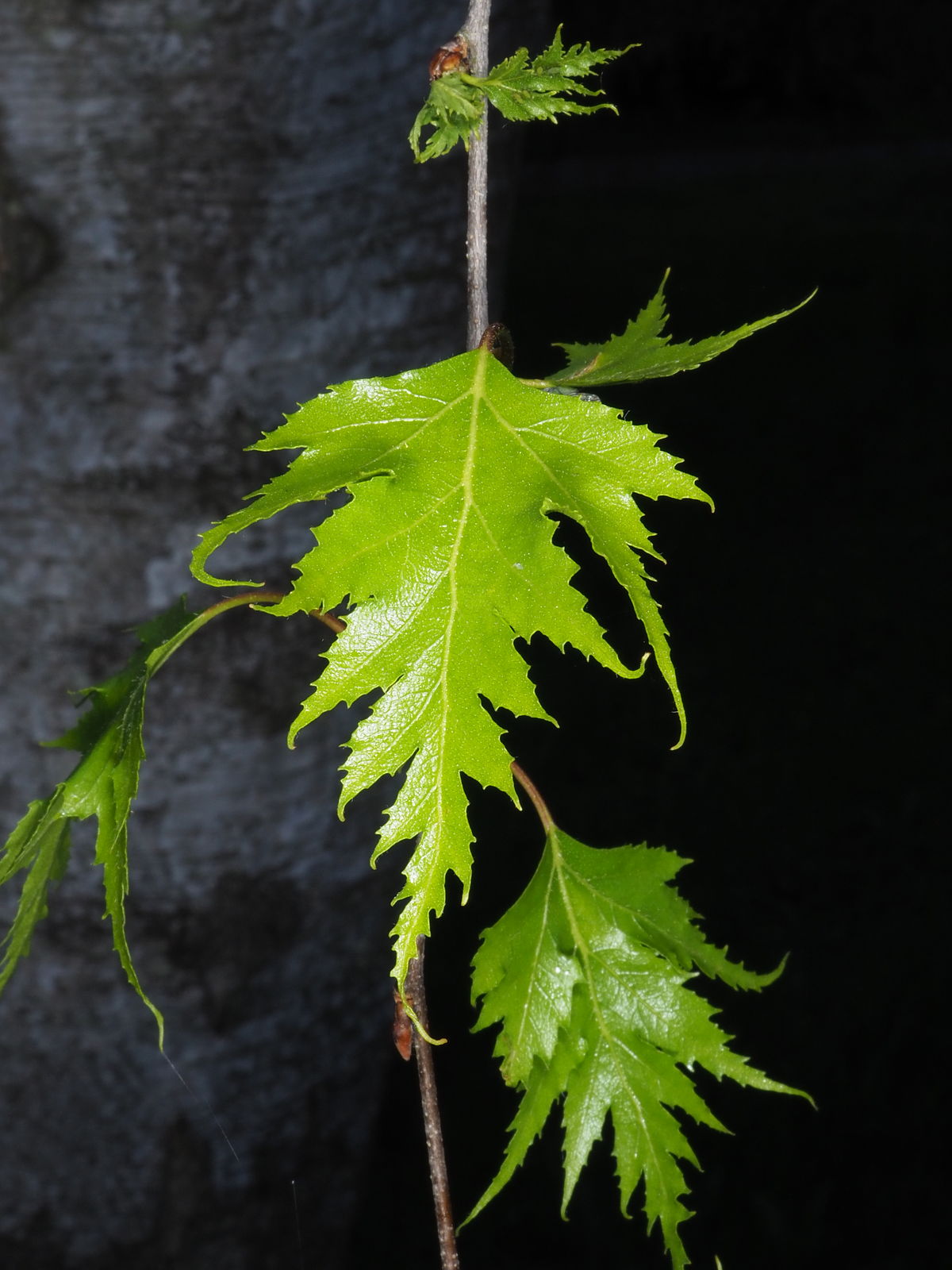
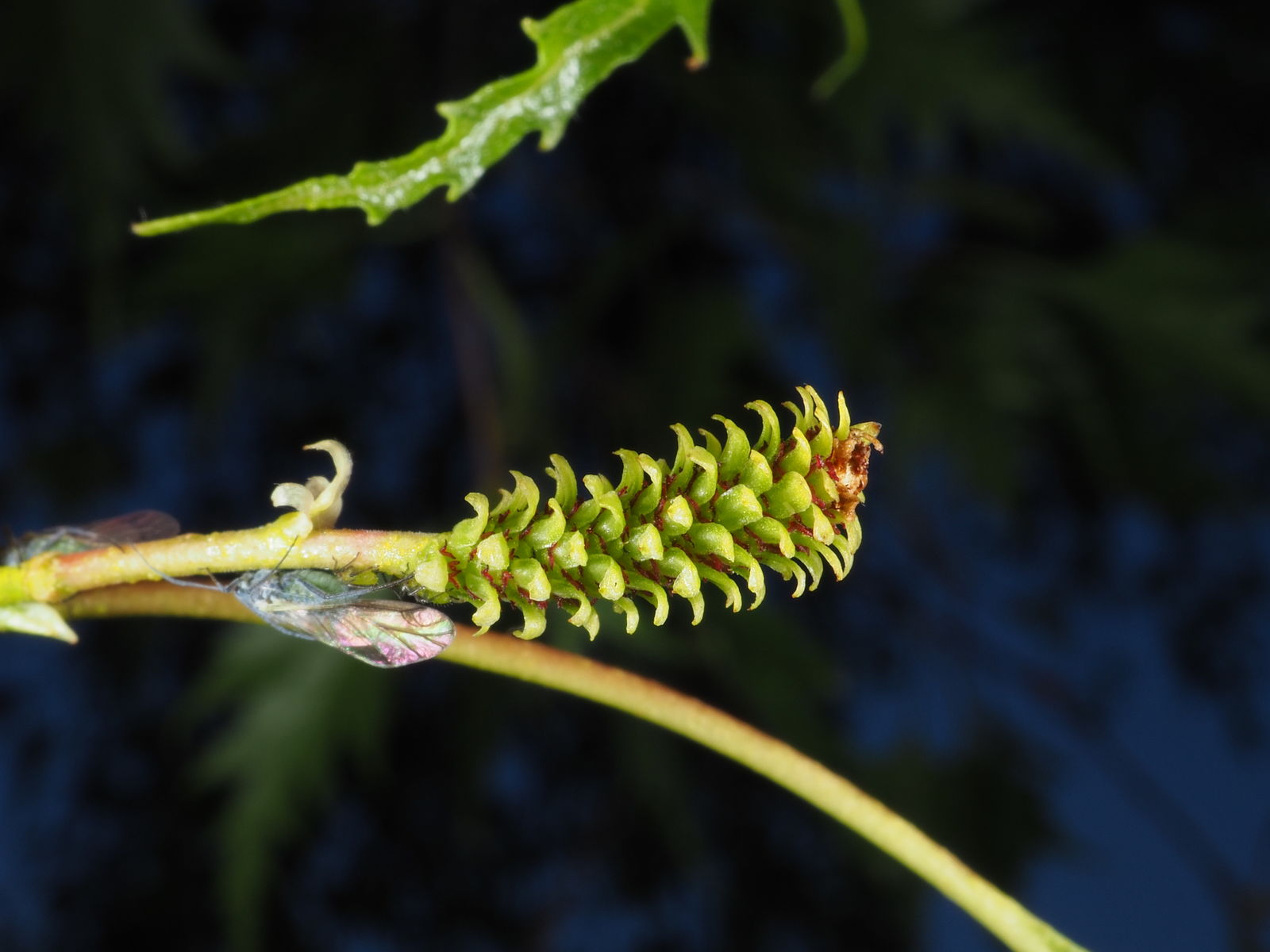
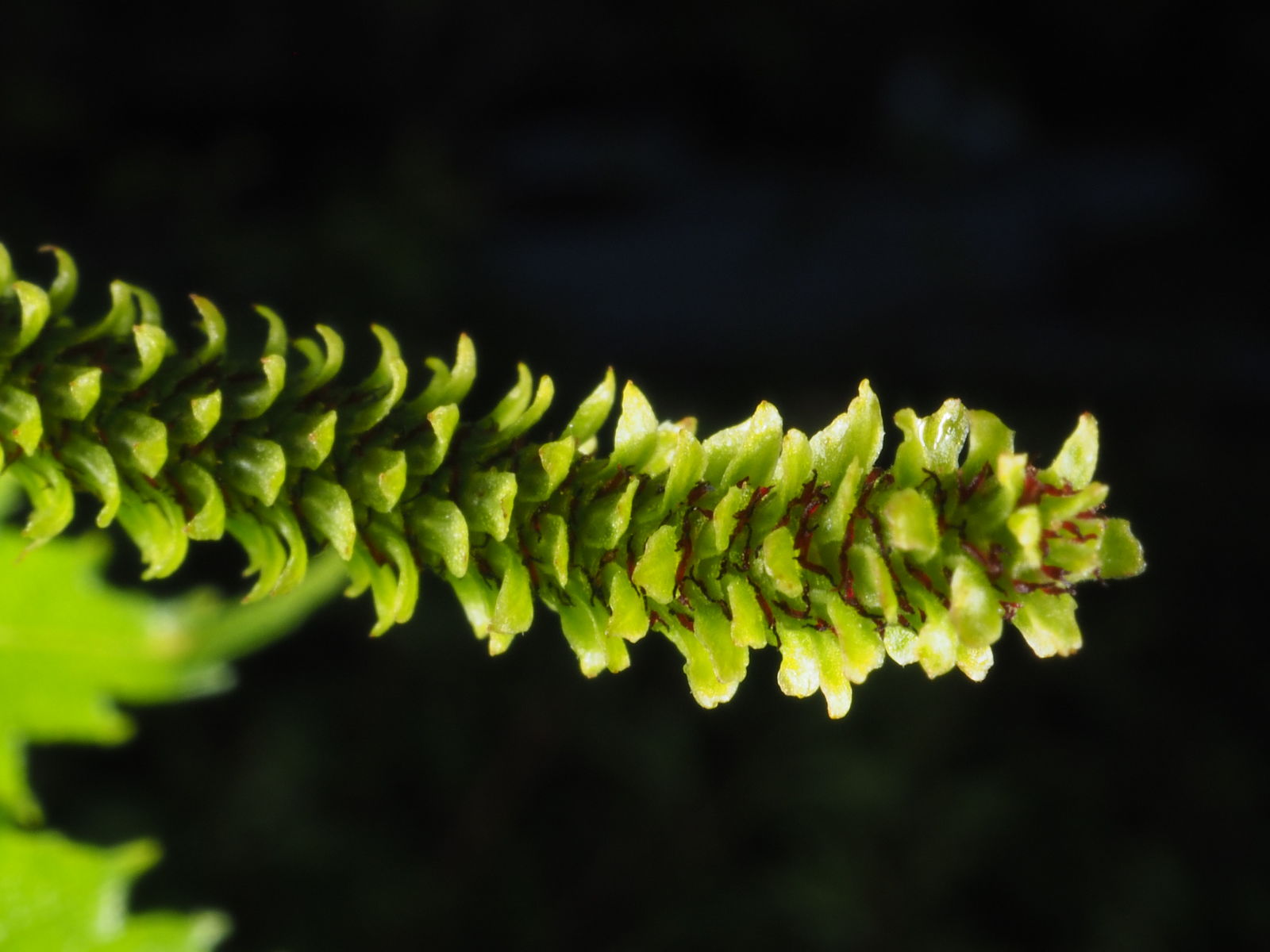
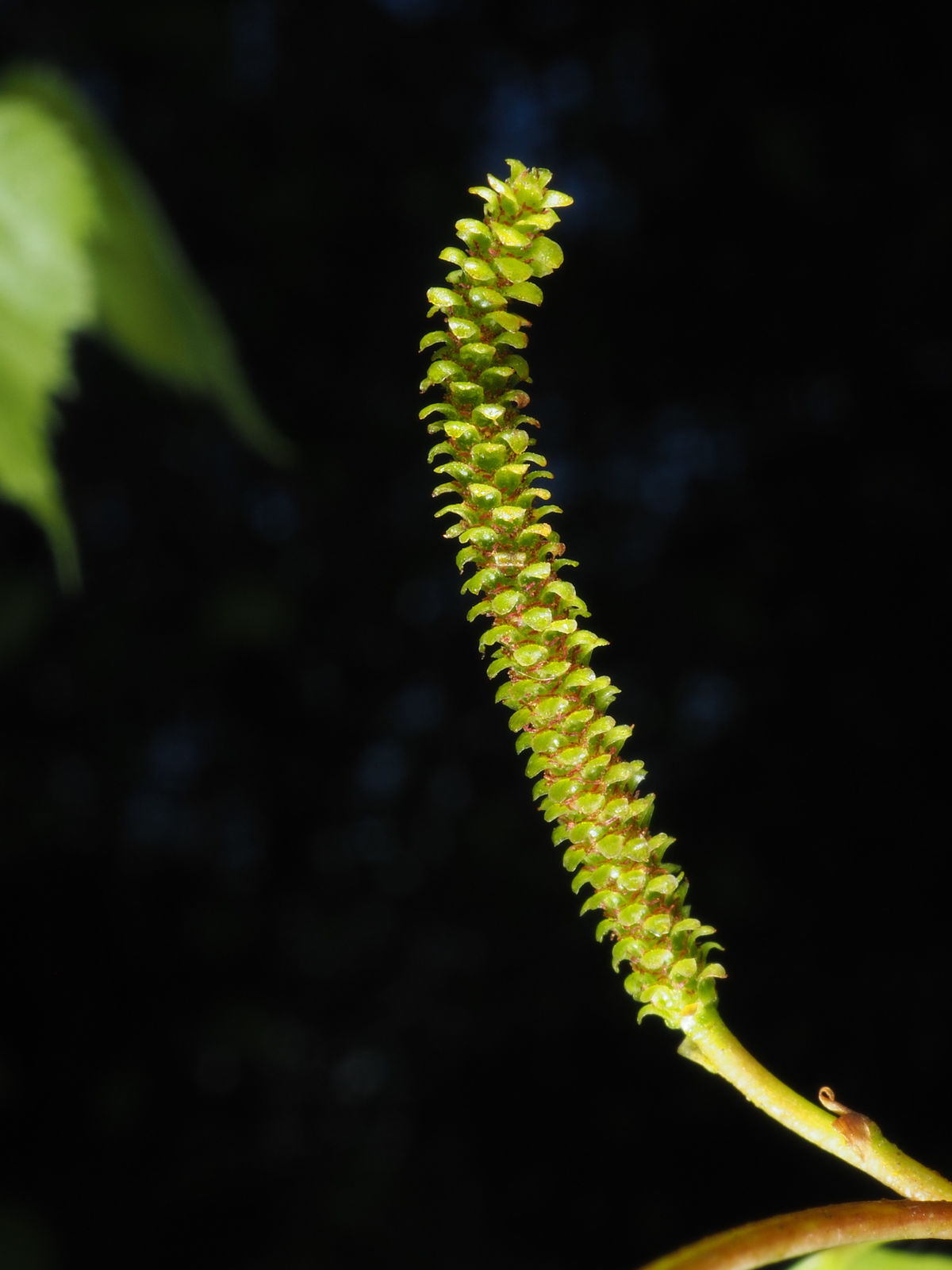
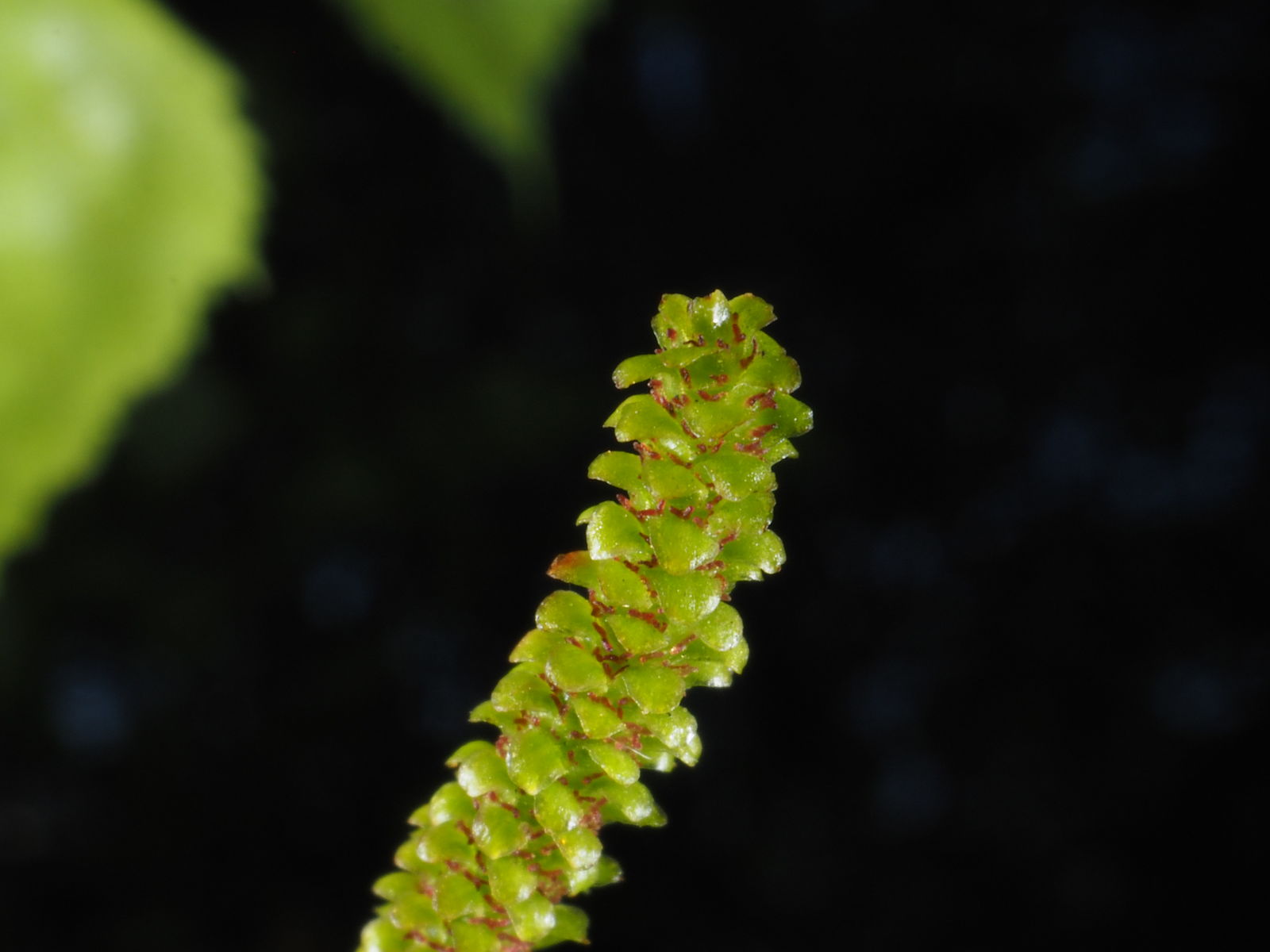
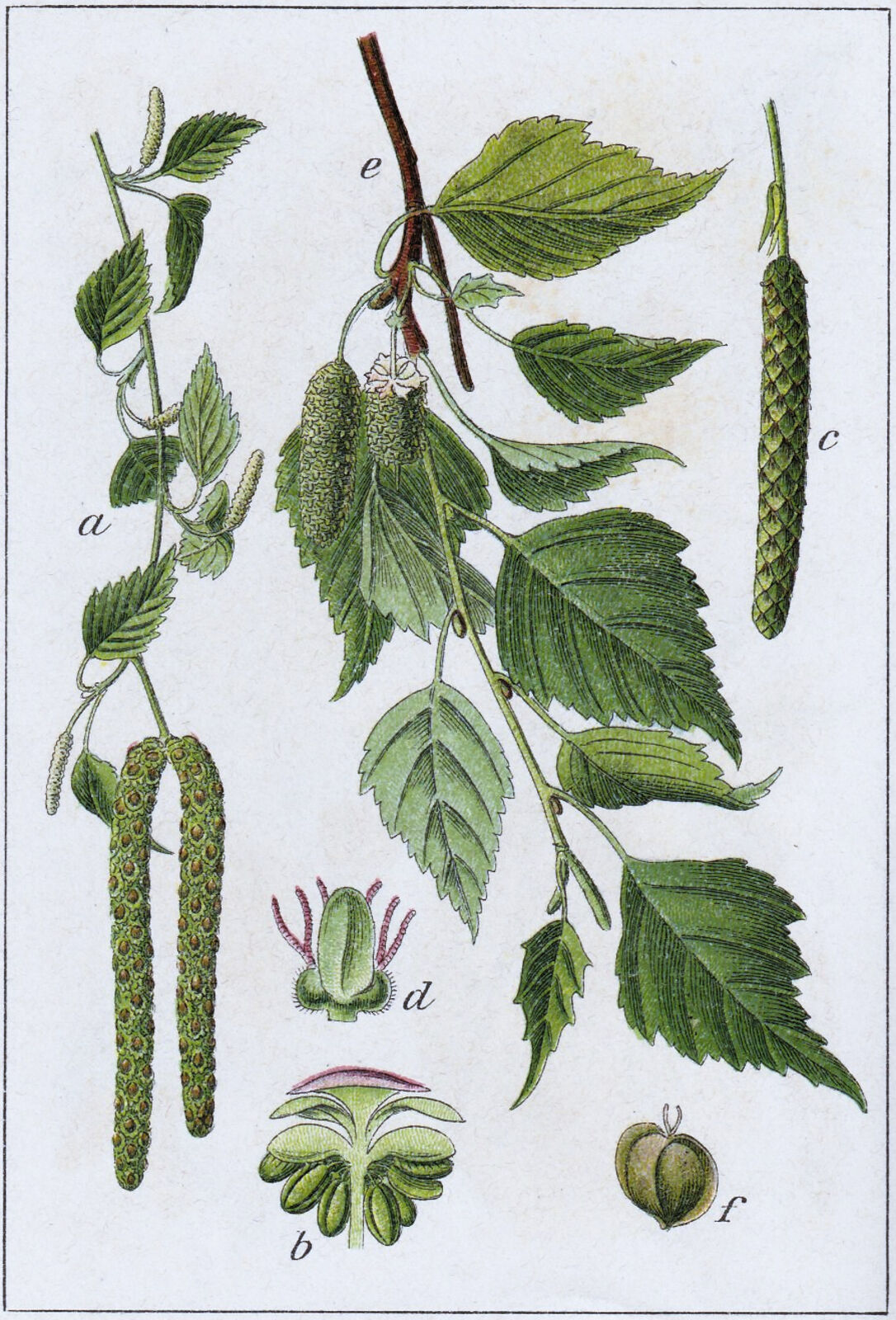
A tree growing to about 30 metres high, with silvery-white bark becoming black and fissured with age.The young twigs often droop; leaves are small and simple with a toothed margin. The flowers are wind-pollinated, grouped into catkins; the males long, loose and hanging down, the females shorter, stiff and erect. Female catkins disintegrate at fruiting stage to release plentiful, tiny winged seeds which are dispersed by the wind.
The catkins appear early in spring and release their pollen in clouds during April. The leaves emerge shortly after, a bright emerald green at first, turning golden in autumn.
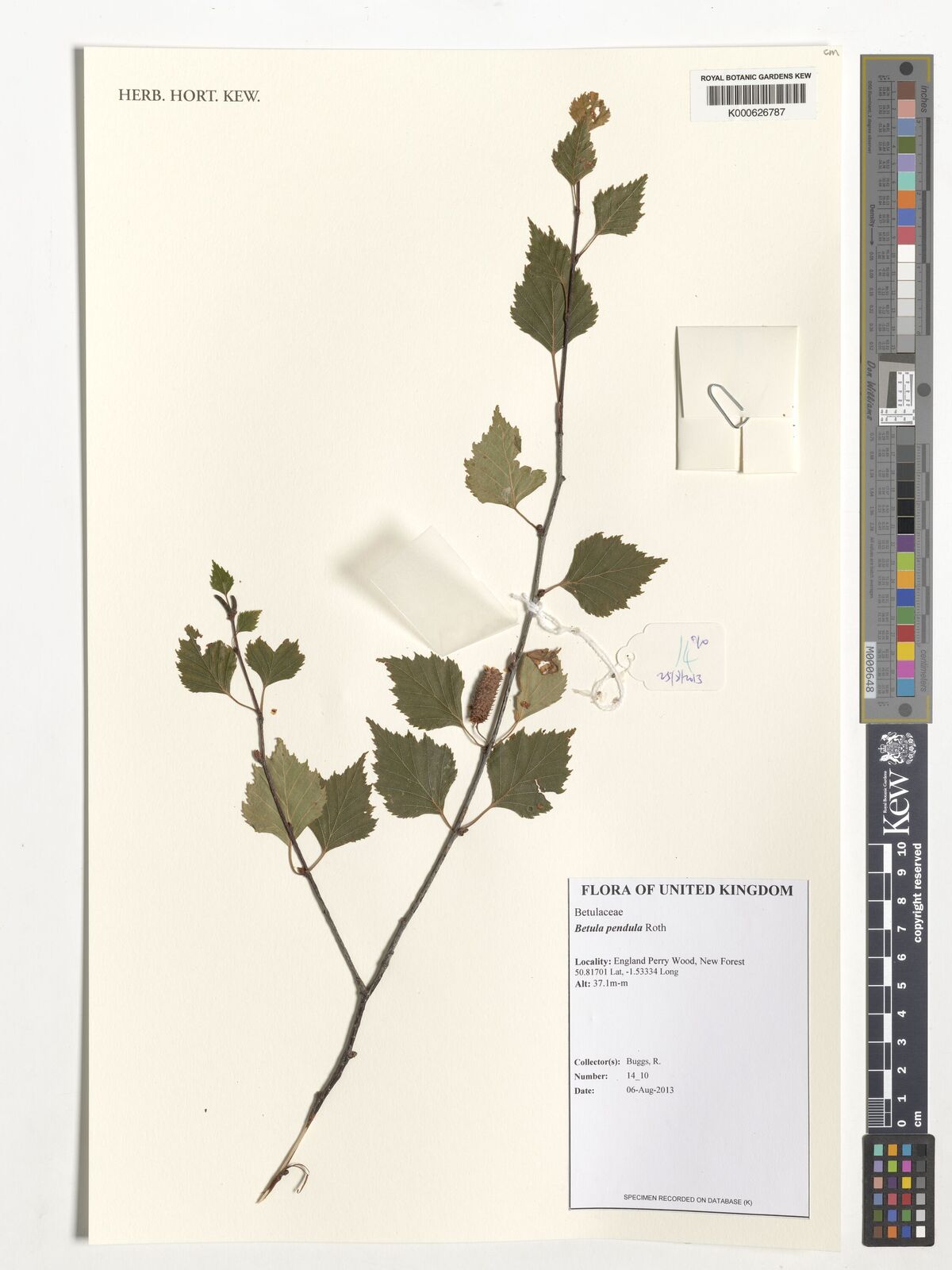
The leaves of silver birch are small and roughly diamond-shaped. They are toothed on both sides and borne on slender warty twigs that shiver in the slightest breeze.
Birch saplings also share this tendency to sway in the wind, and traditionally, foresters would remove young birches from plantations to prevent them from flaying more valuable trees.
As a tree ages, its bark darkens, and becoming rougher, more fissured and prone to attack by the birch polypore fungus Piptoporus betulinus . Ideal as kindling, the bark, like the tree itself, is remarkably hardy and renews from beneath.
Is it a bird's nest? Not necessarily.
Silver birches often appear to have large bird's nests in them but these are in fact a tangle of twigs known as galls, which are growth deformities caused by fungus or mites. These so-called witch's brooms form naturally, but birch twigs are also cut and bundled to make the sort of brooms witches are famous for.
Threats and conservation
There are currently no threats to the tree in the UK.
Due to its invasive nature, silver birch forms scrub which is often the reason why conservation work is carried out on some nature reserve sites. Birch colonises open areas quickly and, when left unchecked, can reduce the conservation value of habitats such as heathland.
Silver birch: a 'pioneer' species
One of the reasons why the birch so successfully colonised the newly emerging lands following the retreat of Ice Age glaciers lies in its abundantly-produced seed. This is very light and efficiently dispersed by the wind. Even today, it remains what botanists call a 'pioneer' species; one of the first trees to occupy suitable ground. This said, it is not a long-lived tree; most trees die or succumb to fungal attack by the age of 70. However, they do offer protection to slower-growing, longer-lived trees such as oaks, and where left to regenerate can play an important role in helping to nurture developing woodland.
Despite suffering attacks from some fungi, birch trees have a symbiotic relationship with the fly agaric fungus ( Amanita muscaria ), which produces its bright red toadstools in autumn. The fungus helps soil nutrients to be absorbed by the tree's roots, and it takes sugars from the tree in return.
Uses
Silver birch is cultivated as an ornamental tree and for its timber. It is also used for medicine.
Wine made from the sap was once taken as a medicine in Britain, whilst the bark was used in Ireland to treat skin complaints. Today, the leaves and bark are mostly used for their diuretic properties. Birch tar oil prepared from the bark of Betula pendula is used to treat skin conditions. One of the major constituents of the bark, betulinic acid, has shown activity against cancerous cells and HIV.
The twigs and galls of birches are widely used on horse race courses, to fill out steeple-chase fences.
In Finland, the cultural and economic value of the species is recognised in its status as the national tree
Millennium Seed Bank: Seed storage
Kew's Millennium Seed Bank Partnership aims to save plant life worldwide, focusing on plants under threat and those of most use in the future. Seeds are dried, packaged and stored at a sub-zero temperature in our seed bank vault.
Number of seed collections stored in the Millennium Seed Bank: Four
Seed storage behaviour: Orthodox (the seeds of this plant survive being dried without significantly reducing their viability, and are therefore amenable to long-term frozen storage such as at the MSB)
Germination testing: Successful